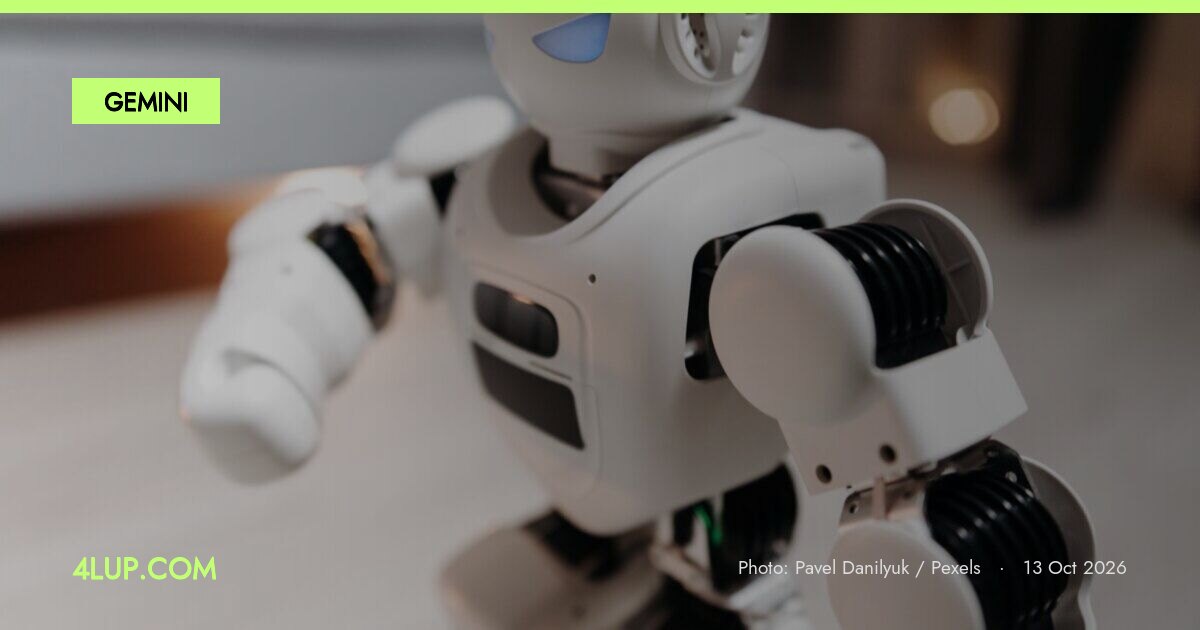
Google DeepMind has reported the development of Gemini 4 Argon for Robotics, marking a new step in the integration of multimodal AI models into physical machinery and automated systems. The announcement focuses on the application of the Gemini architecture to robotic control tasks, though the exact technical specifications of the release remain limited.
The Intersection of Multimodal AI and Physical Systems
As artificial intelligence research progresses, major labs are increasingly working to bridge the gap between digital reasoning and physical execution. Models like Gemini have traditionally processed text, images, audio, and video, but applying these systems to robotics requires translating complex reasoning into motor control and spatial awareness. Google DeepMind’s ongoing work in this domain aims to leverage large-scale pre-training to help robots understand and navigate unstructured environments more effectively.
What Remains Unclear
The announcement did not specify hardware requirements, exact performance benchmarks, or deployment timelines for Gemini 4 Argon for Robotics. Additionally, it remains unknown which specific robotic hardware platforms will support the model at launch or whether the system will be made widely available to external developers and researchers. Observers will need to watch for future updates from Google DeepMind to understand the practical capabilities and availability of the software.
Further details regarding Gemini 4 Argon for Robotics are expected to emerge as Google DeepMind shares more technical documentation on the project.
Lead image: Pavel Danilyuk / Pexels