Researchers have introduced a new approach aimed at helping robots autonomously gather the contact-rich experience required for dexterous manipulation. According to a recent report from arXiv cs.AI, the framework relies on a small amount of human demonstration to kickstart autonomous data collection and model training.
The Mechanics of Supervised Play
In reinforcement learning and robotics, collecting data for tasks that involve heavy physical contact is notoriously difficult. Traditional methods often require extensive manual oversight or struggle to scale safely in real-world environments. By utilizing a play policy derived from brief periods of human interaction via behavior cloning, the newly detailed technique allows a robotic system to venture out and collect hours of interaction data on its own. This gathered data is subsequently used to train a world model, which then assists in guiding model-predictive control during inference tasks.
Unresolved Questions and Future Steps
Despite the conceptual outline provided in the wire report, significant details regarding the underlying implementation remain unaddressed. The announcement did not specify the hardware requirements needed to run the world model or the inference distillation process in real time. Furthermore, the publication omitted any benchmarks detailing success rates across different physical manipulation tasks, nor did it state whether the codebase will be made publicly available for independent verification. Researchers tracking this topic will need to monitor upcoming conference publications for hardware specifications and performance metrics.
As robotic learning continues to intersect with advanced world modeling, frameworks bridging human demonstration and autonomous data gathering will remain a key area of study.
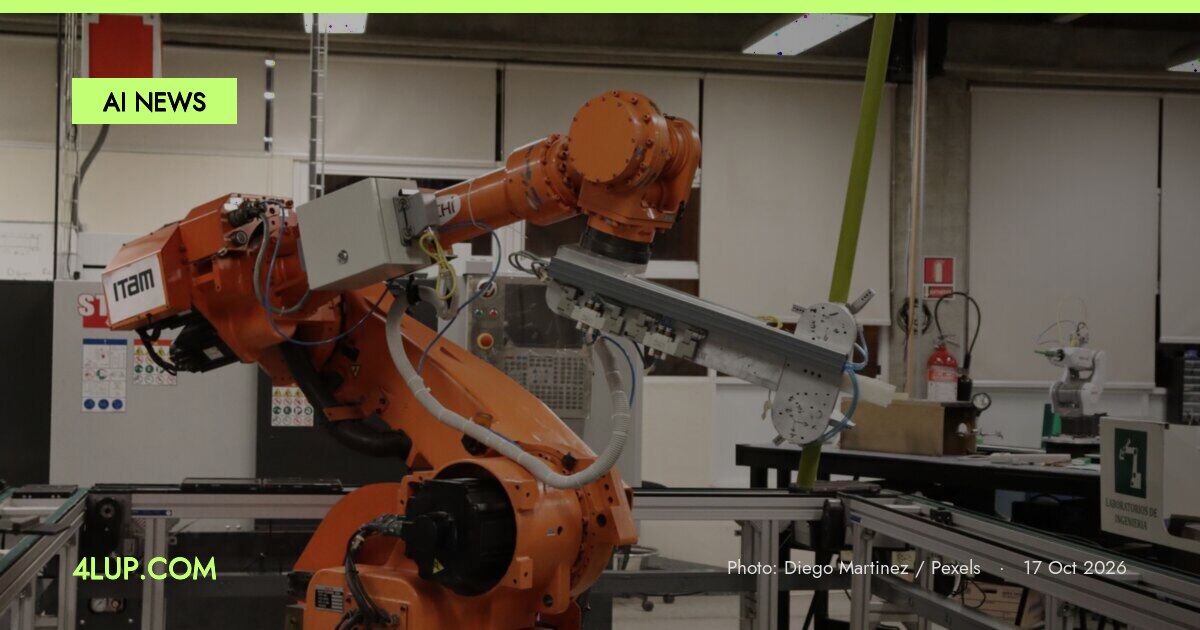
Lead image: Diego Martinez / Pexels