Google has successfully operated an artificial intelligence model aboard an orbiting satellite, marking the first time one of its space-based AI servers generated a response from orbit. In a Friday blog post, as reported by The Verge, Google announced that engineers successfully booted up the satellite’s Tensor Processing Units (TPUs). The on-board hardware ran the company’s Gemma 4 model, which processed a prompt to generate a short haiku describing its view of Earth from space before transmitting the result back to ground control.
Running AI Hardware Beyond Earth
Processing AI workloads directly in space, often referred to as orbital edge computing, represents an alternative approach to traditional satellite operations. Standard earth-observation and communications satellites typically capture raw data in space and transmit the uncompressed streams to ground stations for processing. Running specialized chips like Google’s custom TPUs directly on an orbiting craft allows data to be analyzed locally before being sent down to Earth. Demonstrating that lightweight models like Gemma 4 can function on specialized hardware in space provides a basic proof of concept for local orbital data processing.
Key Operational Details Remain Unspecified
The announcement left several technical and logistical details unconfirmed. Google did not specify the satellite’s launch date, orbit altitude, host craft manufacturer, or the exact hardware specifications of the space-bound TPU units. Furthermore, the announcement did not detail the complete text of the generated haiku or outline a timeline for broader operational or research deployments of orbital TPUs. It remains unclear whether future tests will involve larger language models or more complex data processing tasks, such as real-time imagery analysis directly on board the satellite.
As technology companies explore off-planet computing infrastructure, further updates are expected to clarify how Google plans to integrate orbital AI hardware into its broader cloud network.
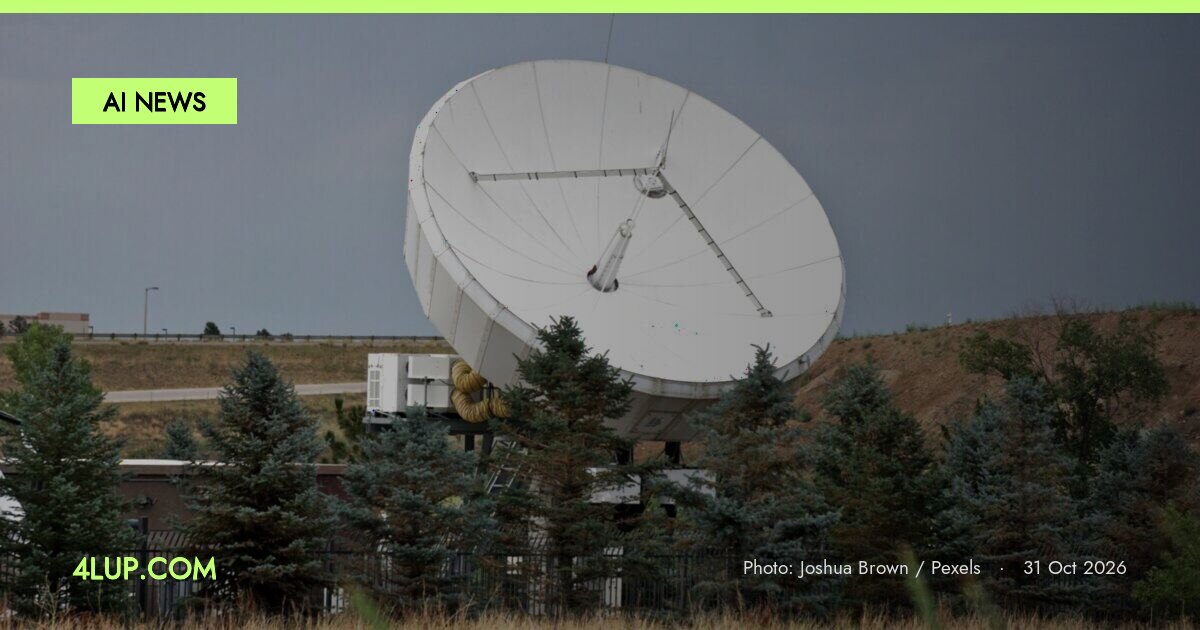
Lead image: Joshua Brown / Pexels