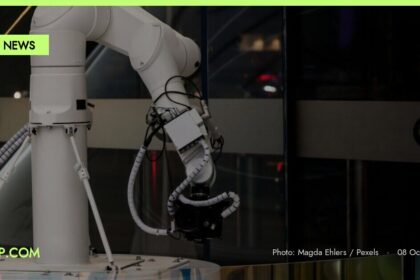

Researchers at MIT have developed a new system designed to identify and correct unreliable object descriptions stored within a robot’s internal memory. By cleaning up these fuzzy memories, the technology enhances a robot’s overall ability to perceive, navigate, and safely interact with its physical surroundings.
Improving Spatial Interaction and AI Reliability
Robots operating in complex environments constantly capture and store data about objects around them. When this stored data becomes inaccurate or degraded, task execution fails. Addressing these memory flaws is a persistent engineering challenge in robotics, as physical agents rely heavily on their internal representations to manipulate tools, avoid obstacles, and complete multi-step instructions reliably.
Unknowns and Future Deployment Details
The announcement did not specify the exact algorithms used to detect the memory errors, nor did it disclose which hardware platforms were tested during the research. Furthermore, the institute did not state when this system might be integrated into commercial robotics or made available as open-source software.
Future updates from the research team may clarify how the system scales in dynamic, real-world environments.
Lead image: Keegan Checks / Pexels