Researchers have introduced a new approach to social navigation that allows autonomous machines to identify and integrate into human groups using natural language descriptions. According to a recent paper reported by arXiv cs.AI, the method addresses the complex task of robot group joining by predicting appropriate joining poses based on real-time activity and group formation.
Understanding Social Navigation and Group Joining
Traditional social navigation typically assumes a robot already has a specified goal and focuses simply on reaching it while adhering to social conventions. Joining an active group of people, however, requires a higher level of semantic understanding. The system must analyze an observation along with a natural-language description of a target group, identify the relevant members, and determine a socially compliant location to integrate. This capability is considered vital for practical applications like robotic guide dogs and autonomous mobility scooters.
Unresolved Details and Future Outlook
Despite outlining this new formulation for language-grounded robot group joining, the announcement did not specify the exact underlying neural network architectures used, the computational resource requirements for real-time deployment, or benchmarks for success rates in crowded environments. Future developments will likely need to address these operational specifics before the technology transitions from theoretical research to physical implementation.
As research into semantic social navigation continues, further updates will clarify how these language-guided models perform in diverse real-world settings.
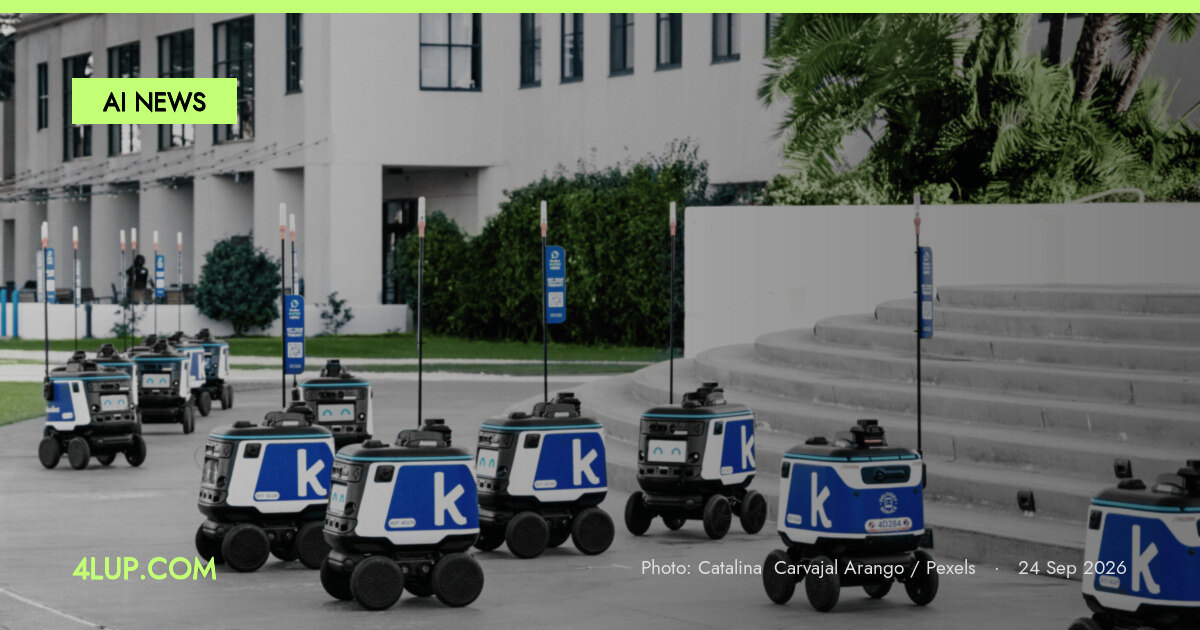
Lead image: Catalina Carvajal Arango / Pexels