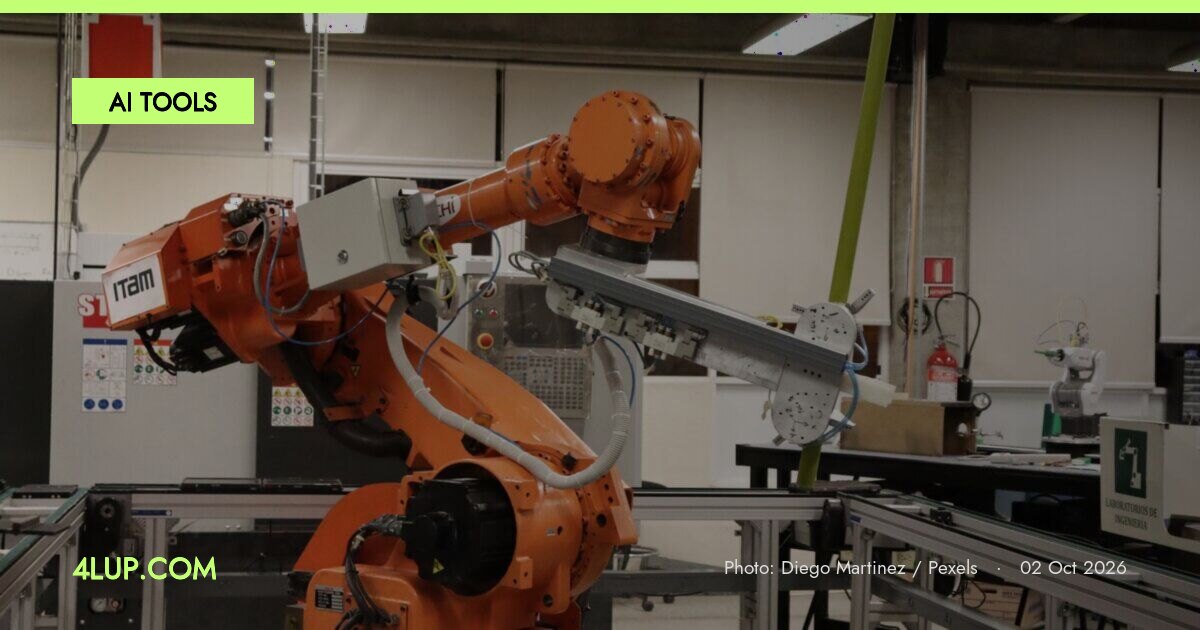
Researchers outlined a new approach for using large language models to control flexible and reconfigurable automation systems in smart manufacturing environments. According to a recent paper reported by arXiv cs.AI, factories are increasingly shifting toward smaller lot sizes and higher product customization, which demands frequent re-programming of industrial equipment. To address this, the proposed architecture pairs each factory module with a dedicated LLM-based agent and an Model Context Protocol tool server that exposes the module’s skills using OPC UA method calls. These agents are designed to function in two distinct roles: offline, they generate deterministic production sequences to cut down on programming overhead, and online, they manage live machines and address runtime faults that traditional static programs struggle to handle.
The Dual-Role Agent Architecture
The integration of language models into industrial automation reflects a broader push to make manufacturing lines more adaptable to changing demands without requiring complete manual rewrites of control software. By separating tasks into offline sequence generation and online fault handling, the system attempts to bridge the gap between heavy engineering planning and real-time operational resilience. Utilizing standard protocols like OPC UA alongside tool servers suggests an effort to connect modern AI reasoning layers directly with established industrial communication frameworks. However, the exact mechanics of how these agents coordinate across complex factory floors or verify the safety of their outputs remain part of ongoing academic exploration.
Open Questions and Unknowns
While the conceptual framework outlines clear offline and online responsibilities for the language model agents, the research paper did not specify several critical implementation details. The announcement did not specify the specific underlying large language models utilized in the tests, nor did it disclose benchmarks regarding latency, computational overhead, or reliability during live runtime fault handling. Additionally, the announcement did not provide data on the scale of the manufacturing modules tested, cost metrics for deployment, or how the system handles hard real-time safety guarantees required in physical industrial environments. Observers watching this space will need to look for future empirical evaluations to see how well LLM-driven control holds up against traditional programmable logic controllers under factory conditions.
As research continues, verifying deterministic behavior in stochastic language models remains a primary challenge for industrial adoption.
Lead image: Diego Martinez / Pexels