According to a recent report from arXiv cs.CL, researchers have detailed a new approach called Recursive Video In-Context Learning, or RV-ICL, designed to help robotic agents improve their task performance across episodes. Traditional setups often rely on text memory to record past actions, while raw demonstration videos contain too much data to fit efficiently into an agent’s context window. Full video inputs tend to slow down execution times, whereas fixed keyframe extraction frequently misses critical contact details necessary for successful grasping. The newly introduced training-free method addresses this challenge by converting demonstration videos into a structured hierarchy that adapts to the specific visual requirements of physical contact.
The Role of Video in Vision-Language-Action Policies
In modern robotics, vision-language-action policies govern how agents interact with their physical environment using multimodal inputs. While large language models excel at high-level planning and task structure, translating those plans into precise physical movements requires fine-grained visual feedback. Contact moments—such as the exact frame where a gripper closes around an object—determine whether a task succeeds or fails. By processing video demonstrations recursively without requiring additional training phases, this technique attempts to bridge the gap between abstract textual reasoning and dense spatial-temporal visual data.
Open Questions and Future Monitoring
Despite the release of the paper, many specifics regarding the implementation remain unknown. The announcement did not specify the hardware requirements needed to run the hierarchical video processing in real time, nor did it disclose benchmarks comparing its latency against standard baseline models. Furthermore, it is unclear how well the method generalizes across entirely different robotic hardware setups or unstructured environments. Observers interested in the intersection of robotics and multimodal models should watch for subsequent peer-reviewed evaluations and open-source code releases to see how the framework performs outside of controlled experimental settings.
As research into embodied AI continues, methods that optimize visual context handling will remain central to improving physical autonomy.
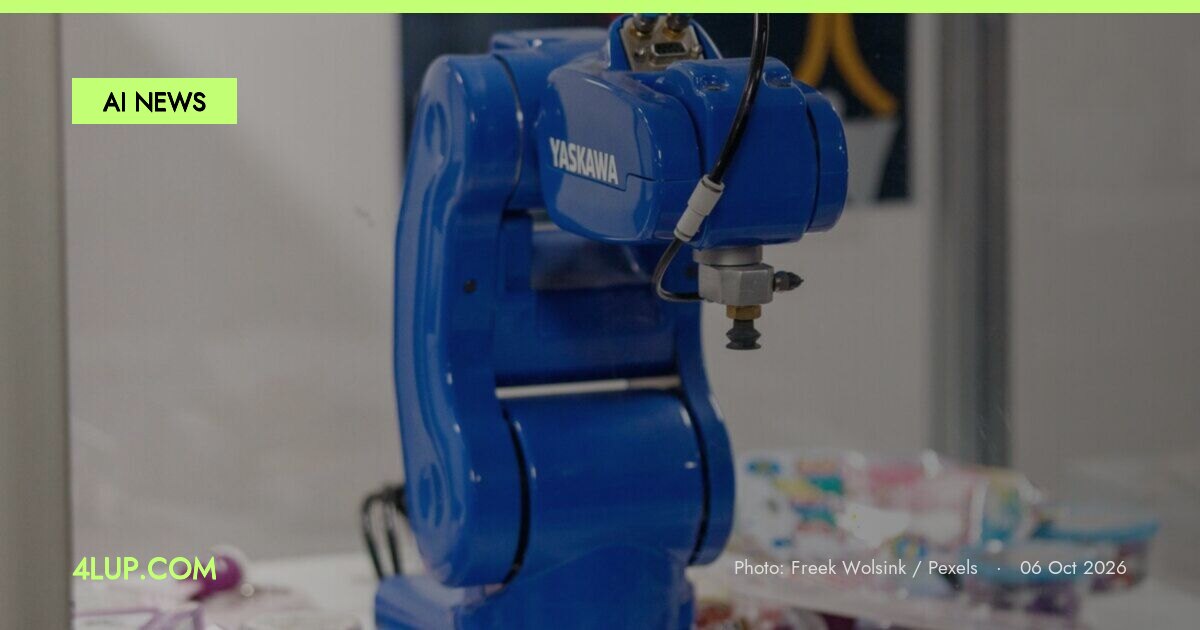
Lead image: Freek Wolsink / Pexels