A new research paper posted to arXiv outlines DepthWorld, a 3D world model designed for robot manipulation. World models serve as data-driven alternatives to traditional robotic simulators, helping with policy evaluation, improvement, and planning. However, current video-based models rely entirely on RGB data, which can produce individual frames that look correct while failing to maintain a consistent 3D structure. To address this limitation, the researchers developed a calibration pipeline aimed at integrating large-scale 3D supervision into manipulation tasks without disrupting existing pretrained video priors.
The Challenge of 3D Geometry in Robotics
In robotic manipulation, having an accurate internal representation of physical space is critical for tasks like grasping, moving, and interacting with objects. Traditional simulators can provide this geometry, but they often struggle to match the complexity of the real world. Data-driven world models attempt to learn these dynamics from observation instead. Yet, models trained purely on 2D video often suffer from drift or geometric inconsistencies over time, as they lack explicit understanding of depth and volume. Incorporating 3D supervision is a logical step to ground these models in physical reality, but doing so without breaking the generalization capabilities of large pretrained video generators remains a technical hurdle.
Open Questions and Future Outlook
The arXiv report details the calibration pipeline approach, but the announcement did not specify performance benchmarks, computing resource requirements, or whether the code and models will be released publicly. It also remains unstated how well the system scales across different robotic hardware platforms or unfamiliar environments. Observers of the robotics and AI space will need to watch for future updates or peer-reviewed evaluations to see how DepthWorld performs in physical deployment compared to existing simulation frameworks.
As research continues, bridging the gap between 2D video generation and 3D spatial consistency will likely remain a central focus for data-driven robotics.
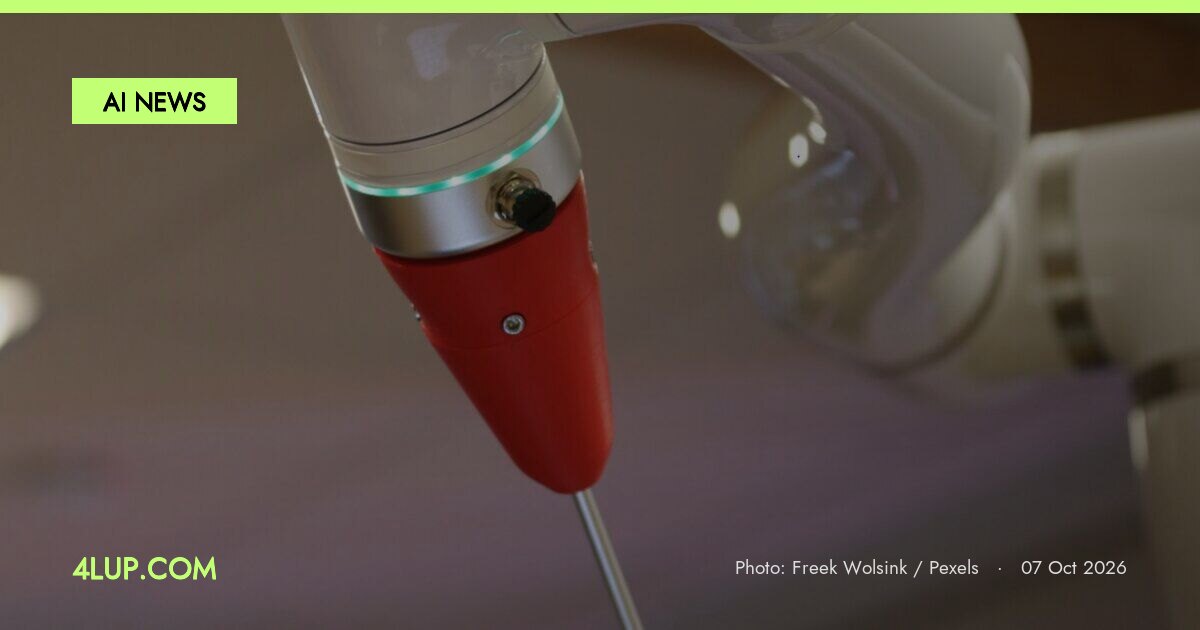
Lead image: Freek Wolsink / Pexels