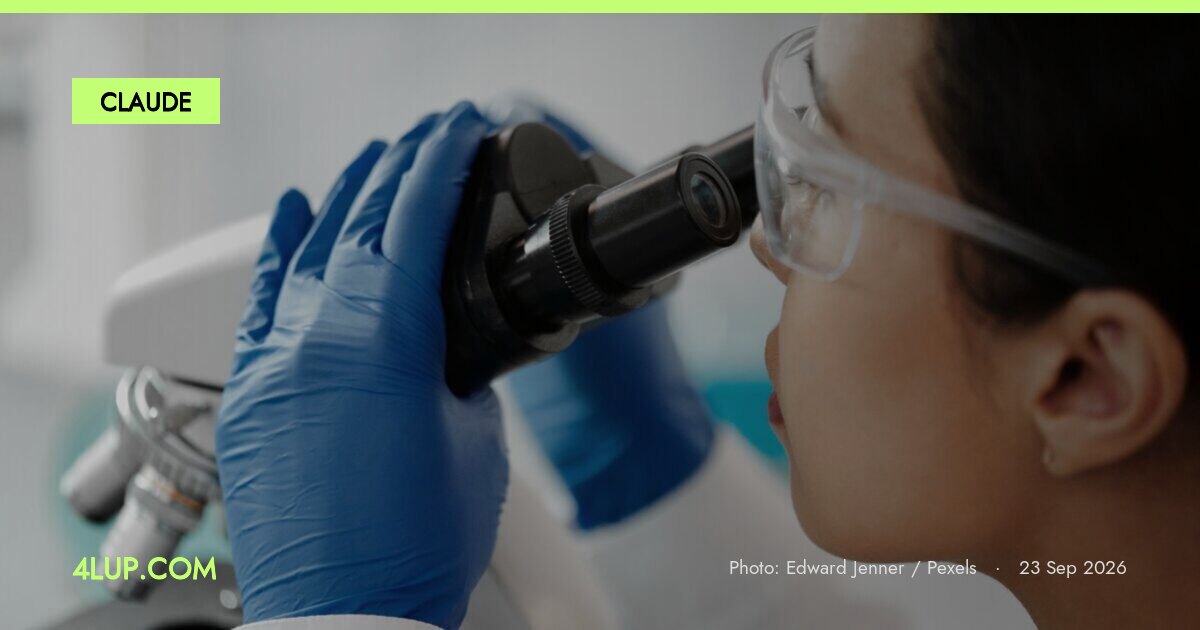
Anthropic has announced that its internal biology lab has successfully uncovered a significant discovery. According to reporting by TechCrunch, the AI firm revealed that the breakthrough emerged from biological research conducted within the company. However, perhaps the most notable aspect of the disclosure is that Anthropic has not allowed its Claude AI models to operate autonomously within the facility. Instead, human researchers remain actively involved in the loop.
The Role of Human Oversight in AI Research
As artificial intelligence systems become increasingly capable in specialized domains like biology and chemistry, the question of autonomy remains central to industry safety discussions. Anthropic’s approach highlights a deliberate constraint on machine agency in sensitive scientific environments. While advanced models are frequently deployed to analyze data and assist with research tasks, maintaining direct human control helps mitigate potential safety risks associated with automated laboratory experimentation.
What Remains Unknown
Despite the disclosure, the announcement did not specify the exact nature of the biological finding or detail the specific experiments that led to it. Furthermore, Anthropic did not clarify whether humans will eventually step back or if direct human supervision will remain a permanent fixture of the lab’s operations moving forward. Observers will need to watch for future updates to learn more about the practical applications of this discovery.
As AI capabilities expand into scientific research, the boundary between automated assistance and independent machine action will continue to draw close scrutiny from the industry.
Lead image: Edward Jenner / Pexels