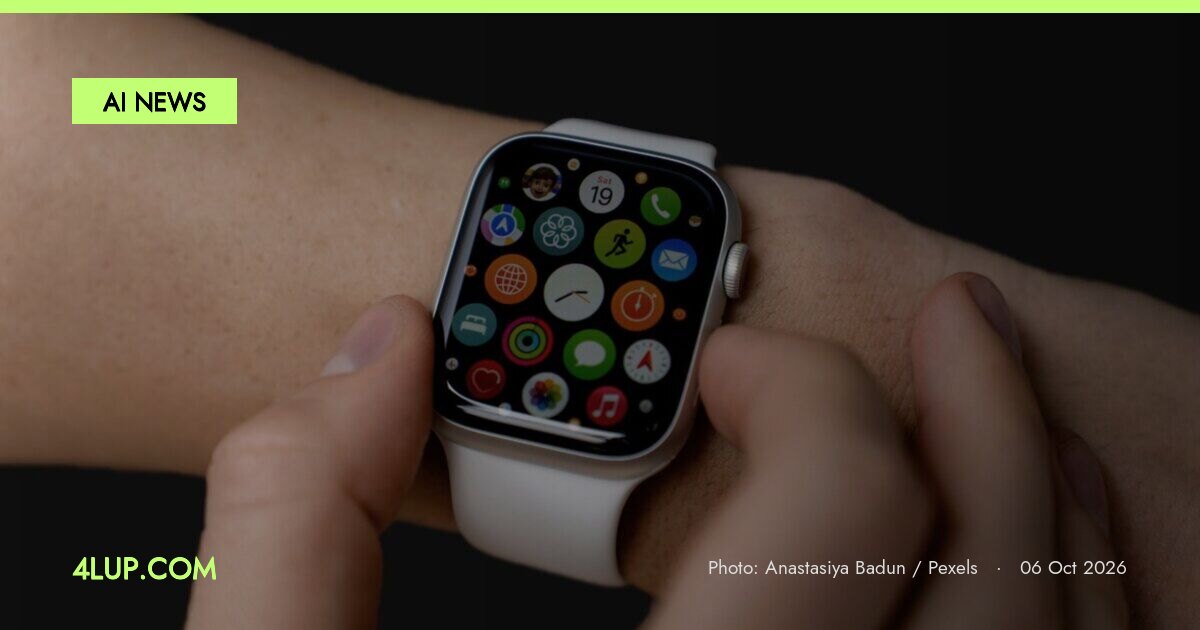
Researchers have introduced a deep learning approach designed to estimate sleep heart rates using data exclusively from wrist accelerometers. Reported by arXiv cs.AI, the method aims to extract cardiac insights from large longitudinal cohorts that feature motion tracking during sleep but lack optical heart-rate sensors. The system, called SeqSmoother, utilizes a transformer-based temporal corrector to process the acceleration signals. It integrates spectral descriptors with an intermediate frequency anchor derived from Nightbeat, alongside a physics-motivated sub-harmonic feature intended to detect harmonic frequency lock-on. During development, electrocardiogram data was utilized strictly for validation purposes, while all features applied during inference are extracted entirely from standard wrist accelerometry.
Extracting Cardiac Data from Motion Signals
Large-scale health studies frequently capture movement data via wrist-worn accelerometers without including optical sensors capable of direct photoplethysmography. Developing reliable ways to recover cardiac metrics from existing motion archives could enable population-scale cardiovascular insights without requiring the deployment of new hardware. By combining spectral analysis with temporal correction via transformers, the approach addresses the technical challenge of translating mechanical movement artifacts into physiological heart rate measurements during sleep.
Unresolved Questions and Future Monitoring
Despite the introduction of the SeqSmoother framework, several operational details remain unknown. The announcement did not specify the exact size or demographic composition of the cohorts used to train and validate the system, nor did it outline the computational resources required for inference. Furthermore, the publication did not provide a timeline for open-source code availability or broader clinical deployment, leaving its immediate practical utility in external research settings unconfirmed.
As research into motion-derived physiology progresses, observers will monitor whether this transformer-based approach can be successfully generalized to diverse hardware manufacturers and wider populations.
Lead image: Anastasiya Badun / Pexels