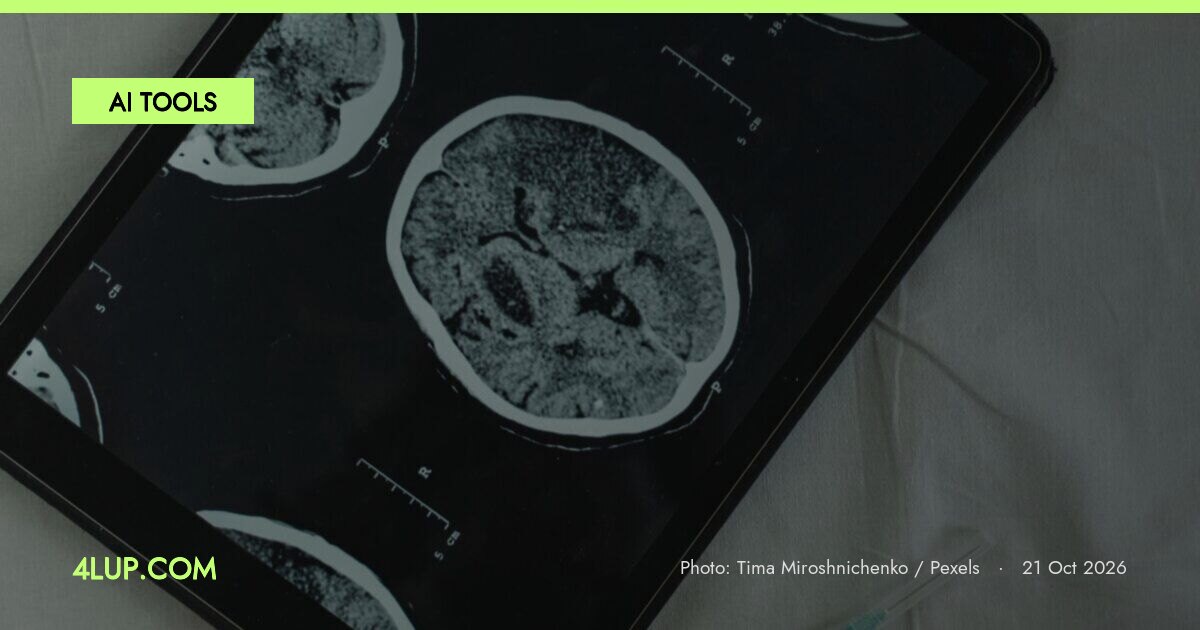
Researchers have introduced HypTI, a new computational framework designed to improve dementia detection by combining clinical tabular assessments with neuroimaging data. According to a recent report from arXiv cs.AI, current multimodal fusion methods typically rely on Euclidean space. The creators of HypTI argue that this standard approach fails to account for the actual geometric structure of medical data, such as the hierarchical organization found in patient clinical records and the multi-scale anatomical patterns present in brain scans. By utilizing hyperbolic space instead, the framework aims to better model these complex relationships.
The Role of Hyperbolic Space
In machine learning, the choice of geometric space dictates how distances and relationships between data points are calculated. Euclidean geometry is flat and uniform, which works well for many standard datasets. However, medical data involving hierarchies and exponential scaling often leads to distortion in flat spaces. Hyperbolic geometry expands exponentially outward, offering a mathematical structure that naturally mirrors treelike hierarchies and multi-scale biological data. This structural alignment is the primary theoretical justification behind the development of HypTI.
What Remains Unclear
Despite the introduction of the framework, several practical details regarding its implementation and performance are currently unknown. The announcement did not specify the diagnostic accuracy of HypTI compared to existing Euclidean-based models, nor did it disclose the specific datasets or clinical trials used to test the framework. Furthermore, the publication did not mention whether the code or model weights will be released publicly, leaving its immediate accessibility for clinical research unconfirmed.
Further updates from the research team will be needed to determine if this geometry-aware approach translates to clinical viability.
Lead image: Tima Miroshnichenko / Pexels