Researchers have introduced InfiNoVA, a data-augmentation framework designed to address a persistent limitation in robotic learning: viewpoint sensitivity. Vision-Language-Action (VLA) policies, which allow robots to translate visual inputs and text instructions into physical movements, often struggle when the deployment camera angle differs from the training data. According to a report by arXiv cs.AI, InfiNoVA uses synchronized multi-camera demonstrations to generate a dense distribution of training views, ensuring the robot can perform tasks from virtually any perspective.
Solving the Physical Data Bottleneck
In traditional robot training, developers must physically position cameras in various locations to capture diverse viewpoints. This process is resource-intensive and usually results in sparse coverage, leaving gaps in the robot’s spatial understanding. InfiNoVA bypasses this by reconstructing manipulation trajectories as time-varying 3D Gaussian representations. This technique, often referred to as 3D Gaussian Splatting, allows the system to synthesize new, geometrically consistent viewpoints from existing video data. By training on these synthetic views, the VLA policies become invariant to camera placement, potentially reducing the failure rate when robots are moved to new environments.
Technical Specifications and Unknowns
While the underlying concept of using 3D Gaussians for view augmentation is clear, the announcement did not specify the exact computational requirements for processing these trajectories. It remains unknown how long the reconstruction process takes per demonstration or if the framework requires specialized hardware beyond standard GPU setups. Additionally, the reporting did not specify which robotic platforms or specific VLA models were used to validate the framework’s effectiveness. Future research will likely need to clarify how InfiNoVA handles occlusion—situations where the robot’s own arm or other objects block the camera’s view—and whether the system remains stable in environments with complex lighting.
As robotics moves toward general-purpose utility, the ability to handle varied perspectives is a technical necessity. InfiNoVA suggests that geometrically grounded data augmentation may be a viable path toward making VLA policies more adaptable to real-world settings.
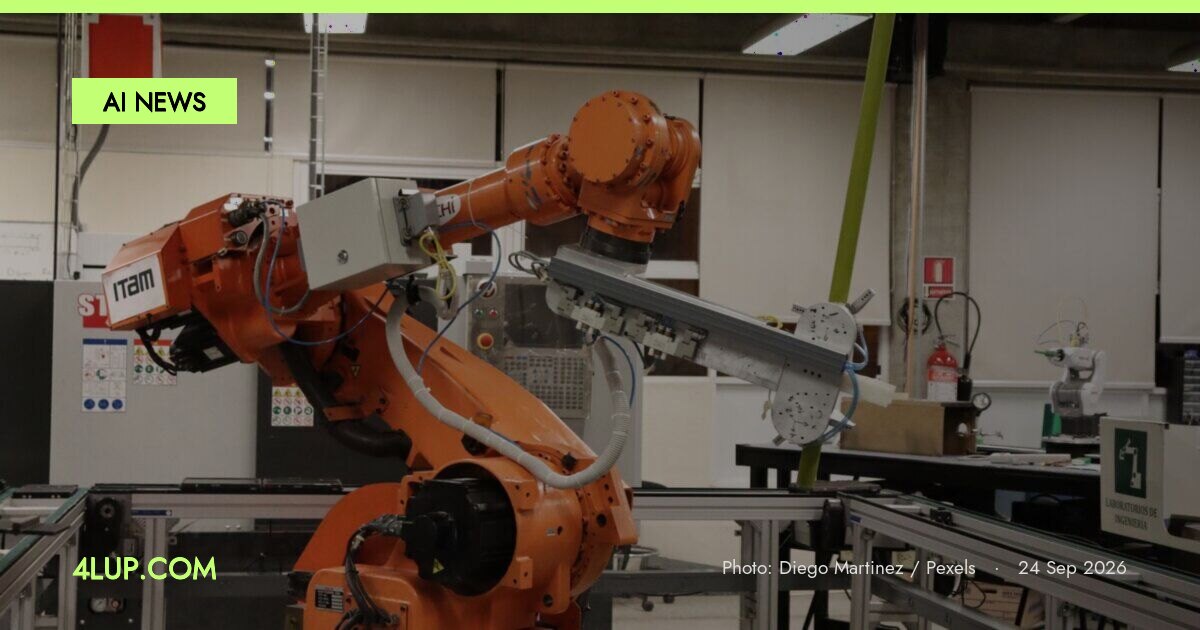
Lead image: Diego Martinez / Pexels