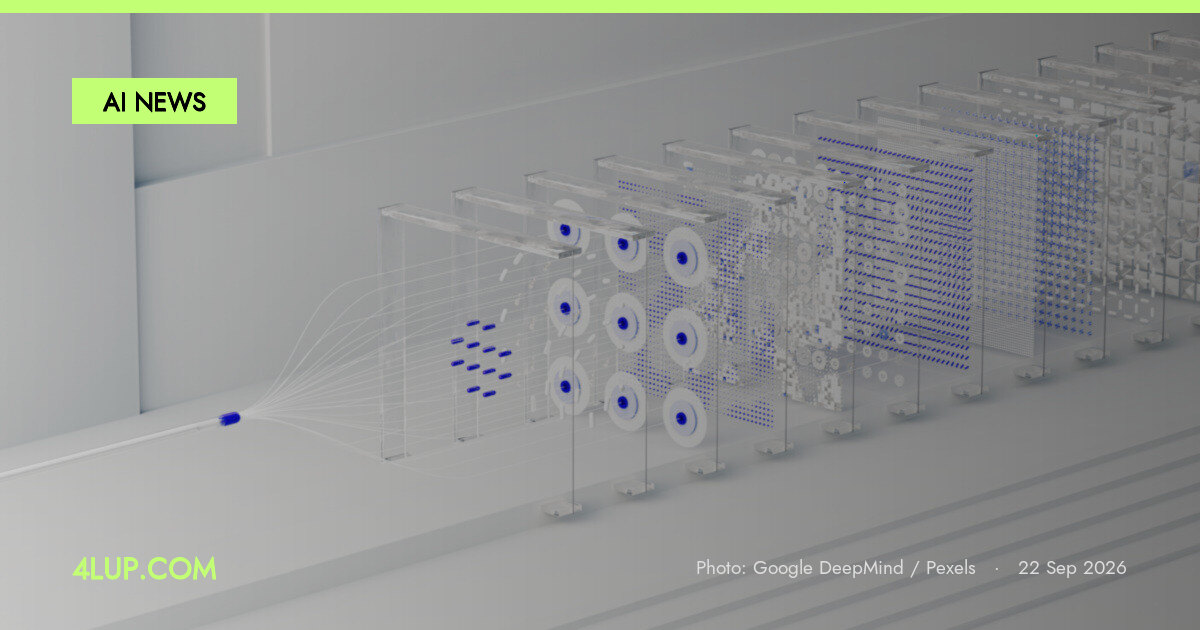
A new technique called LoopCD, or loop-wise contrastive decoding, has been introduced to improve the reasoning capabilities of Looped Language Models. As reported by arXiv cs.CL, these models perform latent reasoning by recursively refining their internal latent representations using shared weights, presenting an alternative to explicit verbal reasoning methods. However, researchers observed that LoopLMs suffer from loop instability, where unstable refinement across different iterations leads to localized uncertain tokens that trigger reasoning errors. LoopCD seeks to correct this problem by intervening directly on these difficult tokens during the inference stage.
Understanding Latent Reasoning and Loop Instability
Looped Language Models rely on recurrently passing internal states through shared network parameters rather than generating lengthy chains of explicit text tokens for reasoning. While this architecture can be more efficient or capture different computational dynamics than standard auto-regressive generation, it introduces unique failure modes. When the internal loop fails to stabilize during the refinement process, the model outputs uncertain tokens that derail the final logic. Contrastive decoding strategies are generally designed to steer model outputs by contrasting probabilities from different model states or configurations, and LoopCD applies this concept across the internal loops of the model.
Open Questions and Future Monitoring
The available information regarding this development is limited. The announcement did not specify the exact architectural scale of the models tested, the computational overhead introduced by the LoopCD intervention, or benchmark performance scores compared to baseline systems. Furthermore, it remains unknown whether this decoding method can be generalized across different model families or if it requires specific training setups. Observers will need to watch for the full research paper release to understand the broader applicability and efficiency trade-offs of the approach.
The introduction of LoopCD highlights ongoing efforts to diagnose and control internal failure points in recurrent transformer-based architectures. Further documentation will clarify its practical utility.
Lead image: Google DeepMind / Pexels