Researchers have introduced a new approach to time-series language models, published recently via arXiv in the computer science computation and language category. Traditional time-series language models usually rely on a single representation of temporal data, applying a fixed inductive bias to every downstream task. The newly detailed method instead uses complementary representations as a central design principle. Specifically, the system combines two visual views, including line plots designed to preserve absolute measurements and the observed coordinate frame.
The Role of Representations in Temporal Data
Time-series language models are designed to allow large language models to process and reason over numerical temporal data. A central challenge in this field is determining which features of the original data should be retained and which variations should be removed during encoding. By utilizing multiple visual perspectives, the architecture attempts to capture different aspects of the temporal data rather than forcing a single representation onto the language model.
Open Questions and Future Outlook
The announcement did not specify the exact underlying language model architecture used, nor did it provide details regarding performance benchmarks across standard temporal reasoning datasets. Furthermore, the release lacked information on computational efficiency, training hardware requirements, or potential open-source availability. Observers will need to watch for the full paper release to evaluate how this dual-view visual approach compares to existing numerical embedding techniques.
Further testing will determine whether combining line plots and coordinate frames yields consistent improvements across diverse forecasting and classification tasks.
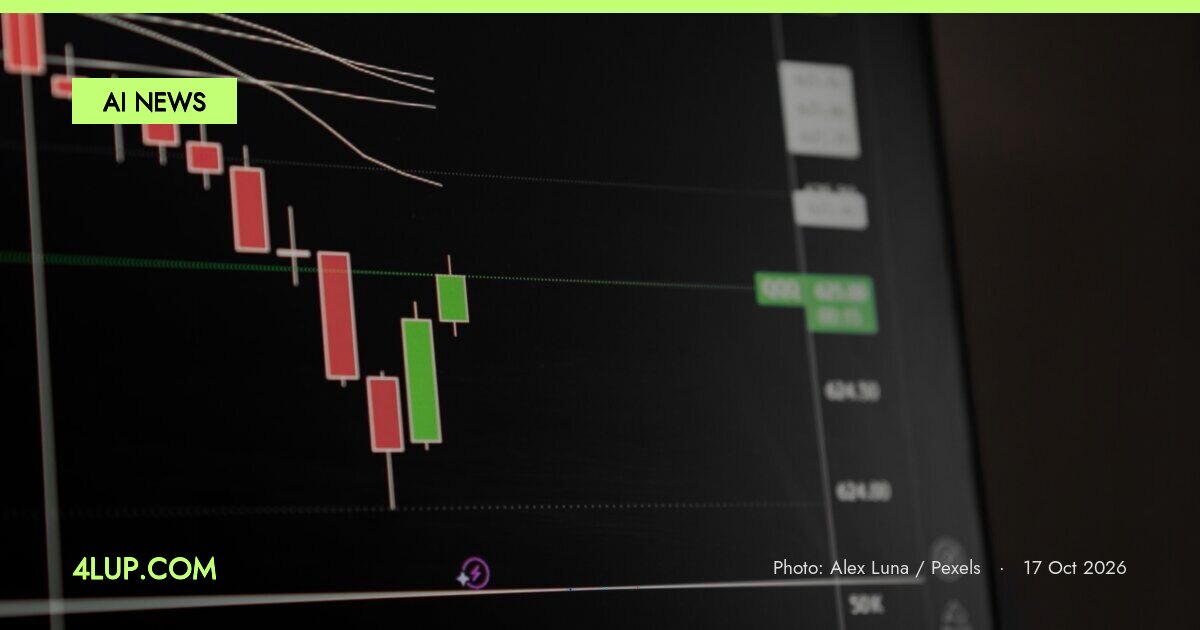
Lead image: Alex Luna / Pexels