A new research direction shared via arXiv cs.AI explores the use of coding agents to tackle generalized task and motion planning problems. Traditional task and motion planning involves tightly coupled discrete decisions and physical constraints like kinematics and dynamics. While generalized approaches aim to reduce planning effort by using regularities across different problem instances, they typically demand heavy engineering tailored specifically to task and motion planning. Researchers are now testing whether coding agents can automate this synthesis by writing programs that generalize across instances when provided with a task description and simulator access.
Understanding Task and Motion Planning
In robotics and artificial intelligence, task and motion planning combines high-level symbolic reasoning with low-level continuous control. An agent must decide both what actions to take and how to physically execute them without collisions or dynamic failures. Even when the environment is fully observable and object-centric, computing these plans efficiently remains a persistent challenge for autonomous systems.
Unknowns and Open Questions
The arXiv cs.AI report did not specify the success rate of the coding agents, the scale of the simulator environments tested, or the computational overhead required to synthesize the programs. Furthermore, the announcement did not detail whether this method scales to real-world hardware or remains restricted to simulated domains.
Future updates from the researchers will likely determine if automated program synthesis can replace manual engineering in complex robotic pipelines.
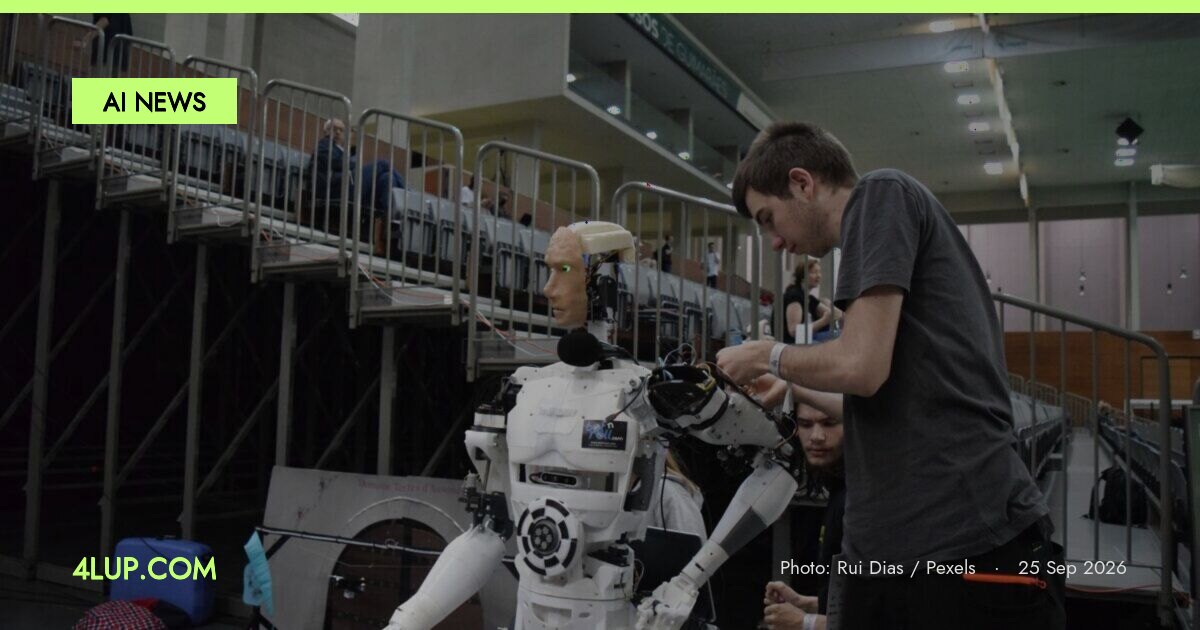
Lead image: Rui Dias / Pexels