A recent paper reported on arXiv cs.AI introduces the Zero-real Agent Policy, or ZAP. The recipe combines a pretrained vision-language model with simulated training to control a robot agent. According to the release, the approach relies on a 27 billion parameter model for world understanding and reasoning. Supervised fine-tuning and GRPO are then applied on simple simulated tasks to teach physical movement via a tool harness. Notably, the training process involved zero real-world robot data.
The Divide Between Understanding and Action
In robotics research, separating semantic comprehension from physical execution has long been a core challenge. Vision-language models excel at recognizing objects and understanding semantic intent within a scene, but they typically lack direct motor control capabilities. By freezing or utilizing a large pretrained model for the cognitive aspect and training the action component entirely within simulation, the ZAP method attempts to bridge this gap. The reported 96.7% success rate on real-world tasks suggests that simulation-driven motor training can effectively pair with general-purpose vision-language understanding.
Unanswered Questions and Future Outlook
Despite the high success rate reported, several details remain unaddressed. The announcement did not specify the exact hardware setup used for the real-world deployment, nor did it disclose the full computational cost required to train the model. Furthermore, the paper leaves open questions regarding how well the approach scales to more complex, unstructured environments outside of the tested scenarios. Future developments will likely test whether zero-real-world data training can maintain reliability across a broader array of physical tasks.
As researchers continue to explore simulation-based physical training, balancing large foundational models with targeted motor control remains a central area of investigation.
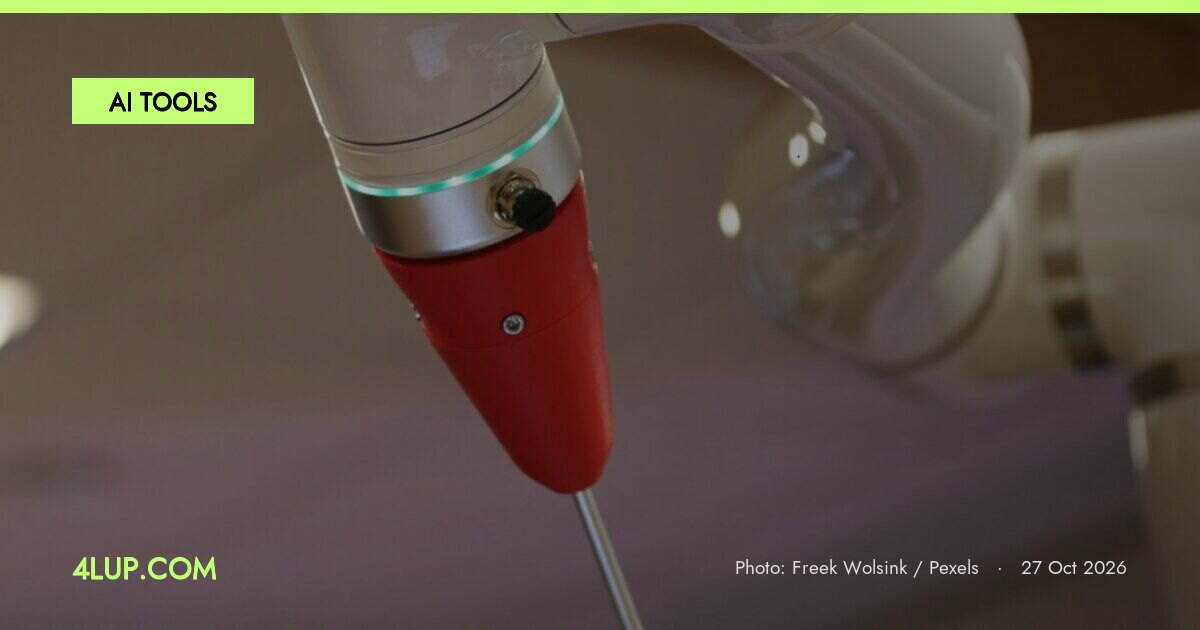
Lead image: Freek Wolsink / Pexels